



Most small business owners are either paying an accountant for work AI can handle in minutes, or doing it manually and making costly mistakes. We tested the leading AI bookkeeping workflows against real small business financials to find what actually works. The gap between manual bookkeeping and AI-assisted bookkeeping in 2026 is not just time. It’s money you’re leaving on the table. Here is exactly how to close it.
What Is AI for Small Business Bookkeeping?
Using AI for small business bookkeeping isn’t about replacing your accountant with a chatbot. It is about automating the repetitive, error-prone work that consumes hours of your week so your accountant, if you have one, can focus on strategy instead of data entry.
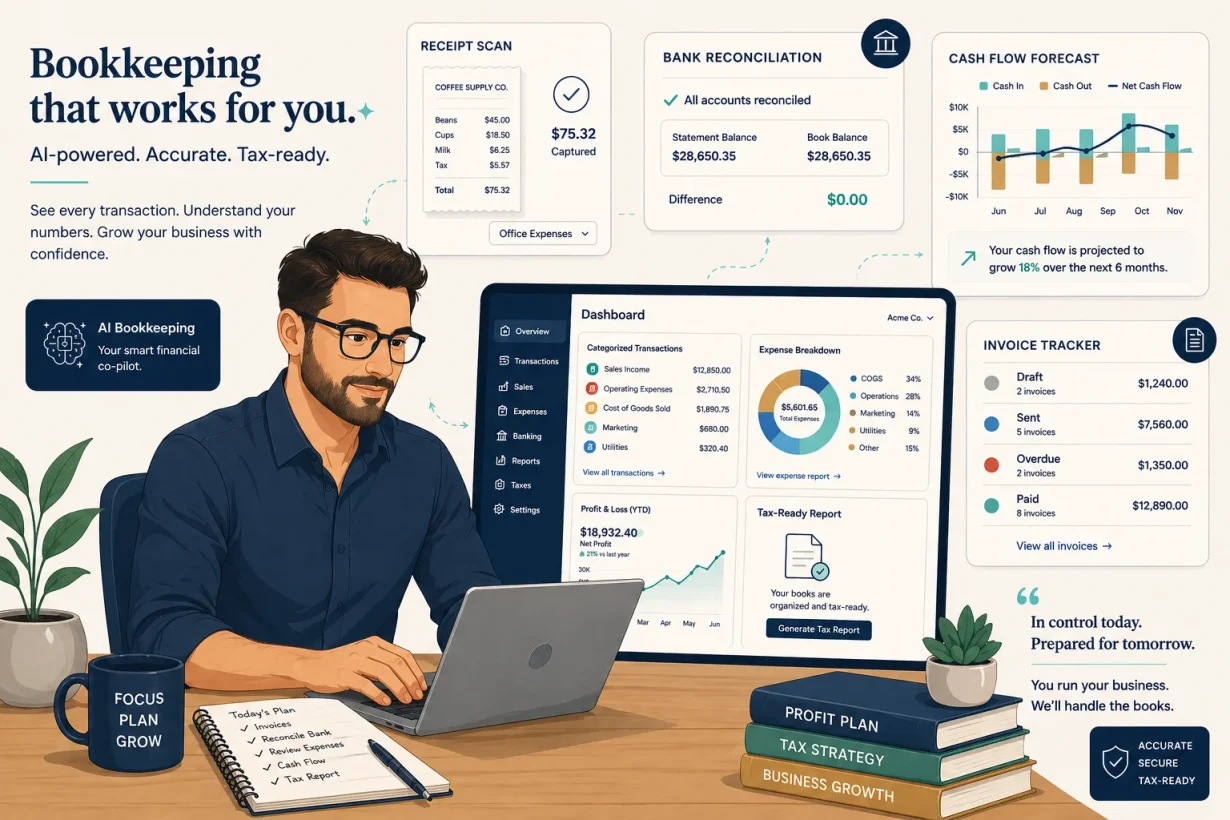
These aren’t just accounting apps with a smarter interface. They are financial teammates that categorize every transaction automatically, reconcile your bank accounts in real time, scan and extract data from receipts the moment you photograph them, and flag anomalies before they become audit risks. AI doesn’t replace the judgment a CPA brings to complex tax strategy. It eliminates the manual work that makes a CPA’s hourly rate feel brutal for routine tasks.
For a small business processing 100 to 300 transactions per month, AI bookkeeping tools typically save 10 to 20 or more hours of manual work monthly, with time savings concentrating in bank reconciliation, which runs 60 to 80% faster, and invoice processing, which becomes near-instant with AI-powered OCR.
Why Small Business Owners Need AI Bookkeeping in 2026
Are you still reconciling transactions manually at the end of every month?
AI bookkeeping software cuts month-end close time by 25 to 40% and reduces costs significantly compared to traditional bookkeeping arrangements. 37% of small businesses using digital tools report measurable error reduction, with mistakes in bookkeeping leading to compliance issues and misinformed decisions when left unchecked.
One small business owner who implemented an AI bookkeeping platform in early 2026 saved $2,880 in taxes by capturing every deductible expense automatically, reduced her accounting fees by $5,000 per year, and achieved a net financial benefit of $7,400 from a $480 annual software cost. That is not an edge case. That is what happens when AI stops expenses from falling through the cracks and gives your accountant clean, categorized data to work with instead of a shoebox of receipts.
By automating routine entries and reconciliations, AI bookkeeping tools save at least 40% of the time small business owners previously spent on manual financial tasks. Time that goes directly back into running your business.
How to Use AI for Small Business Bookkeeping: The 4-Step Setup
Step 1: Connect Your Bank Accounts and Payment Processors
The foundation of AI for small business bookkeeping is direct bank integration. Every transaction that flows through your business, from client payments to supplier invoices to subscription charges, needs to enter a single system automatically rather than being entered manually or imported in batches at month-end.
Most AI bookkeeping platforms connect to your bank accounts, credit cards, PayPal, Stripe, and major payment processors via secure read-only API connections. Once connected, the AI pulls in transactions in real time and begins categorizing them immediately based on merchant names, transaction patterns, and your historical data. You review the categories, correct the occasional misclassification, and the AI learns from every correction you make.
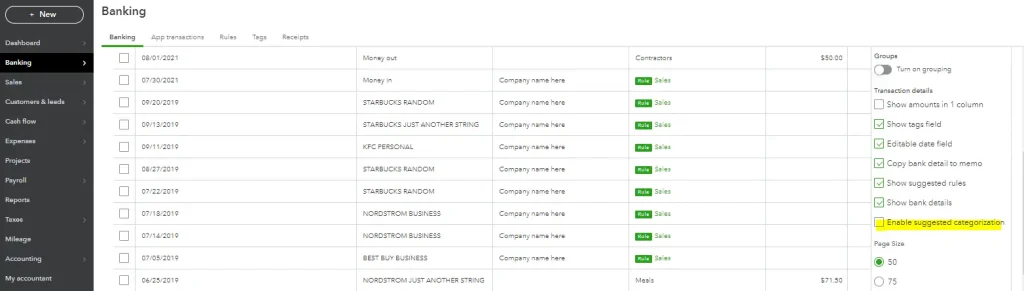
The practical setup takes 30 to 60 minutes. The time savings start the same day.
Step 2: Train Your Categories Once, Then Let AI Handle the Rest
AI bookkeeping learns from your specific business patterns, but it needs an initial training period to get your category structure right. In the first two to three weeks, review your automatically categorized transactions daily and correct any miscategorizations. The AI applies each correction across similar future transactions, so by week four, the categorization accuracy for a typical small business reaches 90% or above without manual intervention.
These aren’t just filing systems. They are pattern-recognition engines that get better the more data they process. A freelance designer and a retail shop have completely different transaction patterns, and the AI adapts to yours rather than applying a generic template.
The single most impactful training step: create clear, consistent category names that align with your tax schedule from the start. Reconciling categories mid-year to match tax reporting requirements costs more time than setting them up correctly in week one.
Step 3: Automate Receipt Capture and Invoice Processing
Manual receipt management is where most small business bookkeeping breaks down. Receipts get lost, faded, or forgotten before they make it into the books, and missed receipts mean missed deductions. AI-powered tools can automatically categorize expenses, generate journal entries for routine items, and detect anomalies or duplicate payments before they become problems.
Most AI bookkeeping platforms include a mobile receipt capture feature: photograph a receipt the moment you get it, and the AI extracts the vendor, amount, date, and category automatically, then matches it to the corresponding bank transaction. No manual entry, no reconciliation headache at tax time.
For invoice processing, AI extracts line items, payment terms, and vendor details automatically from PDFs or email attachments, matches each invoice against purchase orders where applicable, and flags any invoice that is significantly higher than your historical average with that vendor. Humans make errors on the fourth invoice of the day; AI doesn’t.
For more insights, check out our article on automating repetitive tasks at work
Step 4: Generate Reports and Prepare for Tax Season Year-Round
The highest-value output of AI for small business bookkeeping is not the time saved on data entry. It is the financial clarity it creates on demand. A profit and loss statement that previously required a bookkeeper’s afternoon now generates in seconds.Cash flow projections update automatically as new transactions arrive. EY projects that approximately 90% of routine tax tasks are now automatable with AI in 2026.
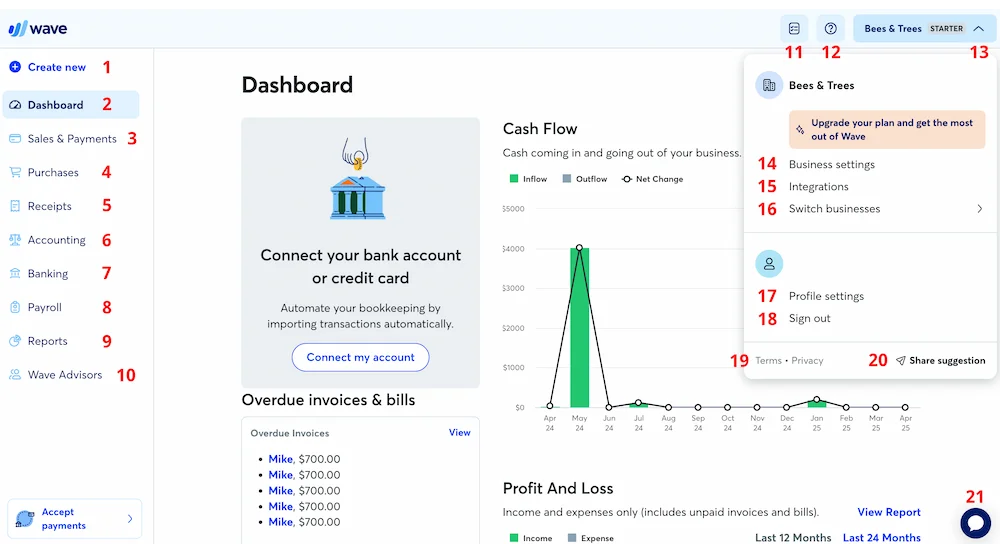
Set up three automated reports from day one:
- Weekly cash flow summary: Know your current cash position and projected inflows and outflows for the next 30 days without opening a spreadsheet.
- Monthly profit and loss: A clean P&L that takes 10 minutes to review rather than two hours to produce.
- Tax-ready expense report: A categorized breakdown of deductible expenses that you hand directly to your accountant at year-end, rather than reconstructing from memory.
When your books are clean, current, and categorized year-round, your accountant’s time goes toward tax strategy rather than cleanup. That shift alone typically reduces accounting fees by 30 to 50% for small businesses that implement AI bookkeeping consistently.
Which AI Bookkeeping Approach Fits Your Business?
Solo operators vs. small teams
Solo operators need AI bookkeeping tools that are genuinely self-service, with no accounting background required to operate them. QuickBooks Online with AI features, Wave (free), and FreshBooks cover the core use case with onboarding designed for non-accountants. Small teams with multiple people handling expenses need role-based access controls and approval workflows on top of the automation layer. The AI handles the categorization; the workflow handles the authorization.
Low transaction volume vs. high transaction volume
Small businesses processing fewer than 50 transactions per month get full value from free or entry-tier AI bookkeeping tools. Wave covers this use case at zero cost with genuine AI categorization, receipt scanning, and basic reporting. Businesses processing hundreds of transactions monthly need platforms with more sophisticated pattern recognition and reconciliation capabilities. The global AI in accounting market is estimated at $10.87 billion in 2026, growing at a 44.6% CAGR, reflecting how fast enterprise-grade AI accuracy is becoming available at small business price points.
DIY bookkeeping vs. accountant-assisted AI bookkeeping
Using AI for small business bookkeeping doesn’t have to mean doing everything yourself. The most cost-effective model for most small businesses is AI handling daily transaction management and monthly reconciliation, with a human accountant reviewing quarterly rather than monthly. 95% of accounting professionals report that technology is helping their firms reduce time spent on compliance tasks while creating more capacity for strategic advisory services. Your accountant becomes more valuable when AI handles the data work and they focus on the interpretation.
Here’s the short version: if you want to stop losing deductions and wasting hours on manual entry, connect your bank accounts to an AI bookkeeping tool today. If you want your accountant to focus on strategy instead of data cleanup, make sure your books are AI-managed before your next quarterly review.
Start Managing Your Books Smarter Today
Using AI for small business bookkeeping shouldn’t feel like learning a new profession. It should feel like having a financial assistant who never misses a transaction, never loses a receipt, and has your books ready whenever you need them.
Not sure where to build your full stack? Read our complete guide to the best AI tools for small business owners in 2026
Frequently Asked Questions
Can I really use AI for small business bookkeeping without an accountant?
Yes, for day-to-day bookkeeping tasks. AI handles transaction categorization, bank reconciliation, receipt capture, and financial reporting automatically. For complex tax strategy, IRS correspondence, and multi-entity structures, a licensed CPA is still the right call. The goal is not to replace professional judgment but to eliminate the manual work that makes it expensive.
How much time does AI for small business bookkeeping actually save?
For a small business processing 100 to 300 transactions per month, AI bookkeeping tools typically save 10 to 20 or more hours of manual work monthly. Time savings are highest in bank reconciliation, invoice processing, and month-end close, which AI compresses from days to hours.
What is the best free AI tool for small business bookkeeping?
Wave is the strongest free AI bookkeeping tool for small businesses, covering automated transaction categorization, receipt scanning, invoicing, and basic financial reporting at zero cost. It is the right starting point for businesses processing fewer than 100 transactions per month before committing to a paid platform.
Is AI bookkeeping secure for small business financial data?
Yes. Reputable AI bookkeeping platforms use bank-level encryption for data storage and transmission, read-only API connections to bank accounts that cannot initiate transactions, and SOC 2 compliance for data security standards. Always verify the security certifications of any platform before connecting financial accounts.
How does AI for small business bookkeeping help at tax time?
AI categorizes every deductible expense automatically throughout the year, generates tax-ready reports on demand, and maintains the documentation trail an accountant needs to file accurately. Small business owners who implement AI bookkeeping year-round typically reduce their accountant’s tax preparation time by 30 to 50%, which translates directly to lower accounting fees.
What tasks does AI for small business bookkeeping still need human review for?
Complex tax strategy, IRS audit responses, multi-entity accounting, and industry-specific compliance requirements still require experienced professional oversight. AI also occasionally miscategorizes unusual transactions that fall outside your established patterns. A weekly 15-minute review of flagged items is all the human oversight most small businesses need to maintain clean, accurate books.